

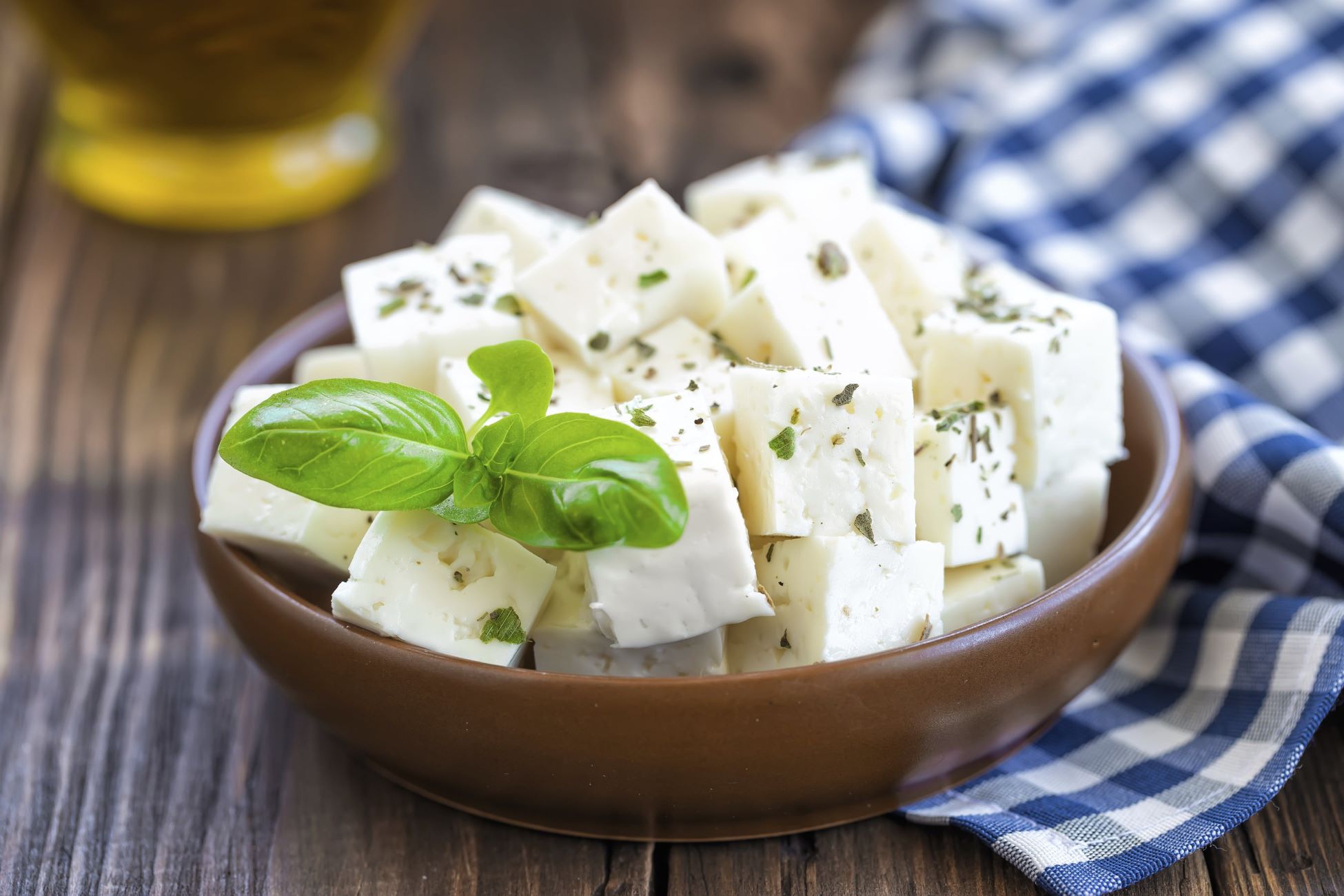
Making your own feta cheese at home is such a fun and rewarding project. I love this recipe because it turns simple ingredients into a tasty cheese that feels special and fresh. Scroll down to see how easy it is to create this classic cheese right in your kitchen.
Some ingredients in this recipe might be new if you haven’t made cheese before. Whole milk is easy to find at any grocery store, but you might need to look a little harder for rennet, which is used to help the milk turn into curds. You can usually find rennet in the dairy or specialty food section, or buy it online. White vinegar and salt are common kitchen staples, so no worries there!
Ingredients For Feta Cheese Recipe
Whole milk: The main ingredient that forms the base of the cheese, providing creaminess and flavor.
White vinegar: Helps acidify the milk so it starts to curdle and form curds.
Rennet: A natural enzyme that helps the milk solidify into curds, essential for making cheese.
Salt: Adds flavor to the cheese and helps preserve it.
Technique Tip for This Recipe
One of the trickiest parts of making this feta cheese recipe is gently stirring in the dissolved rennet without breaking up the milk too much. Here’s how to do it step by step:
- After you add the rennet to the warm milk, use a large spoon or a whisk with wide loops.
- Stir slowly and carefully in one direction, like you’re drawing a big circle in the pot.
- Keep stirring for about a minute, but don’t rush or stir too hard—just enough to mix the rennet evenly.
- Once you’re done, cover the pot and don’t touch it again until the curds start to form.
Doing this gently helps the milk turn into nice, soft curds instead of breaking into tiny pieces. If you stir too fast or too much, the curds won’t form properly, and your cheese might end up crumbly or uneven. Taking your time here means the curds will be just right for cutting and heating later on.
When I first tried this, I was so excited that I stirred way too hard and ended up with a mess of tiny curds that didn’t hold together well. After that, I learned to slow down and treat the milk gently like it’s a delicate dance partner. It really makes a difference! Also, using a big spoon instead of a whisk can help you control the stirring better.
This little step might seem simple, but it’s key to getting that creamy, crumbly texture that makes homemade feta cheese taste so special. Plus, it’s kind of fun to watch the milk slowly change as you stir!
Suggested Side Dishes
Alternative Ingredients
whole milk - Substitute with goat milk: Goat milk has a similar fat content and tangy flavor, making it a good alternative for achieving a similar texture and taste in the cheese.
whole milk - Substitute with 2% milk: While slightly less creamy, 2% milk can still be used to make cheese, though the texture may be a bit firmer.
white vinegar - Substitute with lemon juice: Lemon juice has a similar acidity level and can curdle the milk in the same way as white vinegar.
white vinegar - Substitute with apple cider vinegar: Apple cider vinegar has a slightly different flavor but will still provide the necessary acidity to curdle the milk.
rennet - Substitute with vegetarian rennet: Vegetarian rennet is a plant-based alternative that works similarly to traditional rennet in coagulating the milk.
rennet - Substitute with microbial rennet: Microbial rennet is derived from fungi or bacteria and can be used as a substitute for animal-based rennet.
salt - Substitute with kosher salt: Kosher salt has a similar texture and flavor, making it a suitable alternative for salting the cheese.
salt - Substitute with sea salt: Sea salt can be used as a substitute, providing a slightly different mineral content but still effectively salting the cheese.
Alternative Recipes You Might Like
How to Store or Freeze This Dish
- Once your feta cheese is ready, wrap it tightly in plastic wrap or place it in an airtight container to maintain its freshness.
- Store the wrapped cheese in the refrigerator, where it can last for up to a month. Ensure the temperature is consistently cool to preserve its texture and flavor.
- For longer storage, consider submerging the feta cheese in a brine solution. Mix 1 cup of water with 1 tablespoon of salt, and place the cheese in this solution. This method can extend its shelf life to several months.
- If you prefer to freeze the feta cheese, cut it into smaller portions or cubes. This makes it easier to thaw only what you need.
- Wrap each portion in plastic wrap or aluminum foil, then place them in a freezer-safe bag or container. Label the container with the date to keep track of its storage time.
- When ready to use, thaw the feta cheese in the refrigerator overnight. Avoid thawing at room temperature to prevent any texture changes or spoilage.
- Note that freezing may alter the texture slightly, making it more crumbly. However, it will still be perfect for crumbling over salads, soups, or incorporating into baked dishes.
- If you notice any off smells, discoloration, or mold, discard the cheese immediately to ensure safety.
How to Reheat Leftovers
Oven Method:
- Preheat your oven to 350°F (175°C).
- Place the feta cheese in an oven-safe dish.
- Cover the dish with aluminum foil to prevent drying out.
- Heat for about 10-15 minutes or until the cheese is warmed through.
- Remove from the oven and let it cool slightly before serving.
Microwave Method:
- Place the feta cheese on a microwave-safe plate.
- Cover it with a microwave-safe lid or another plate to retain moisture.
- Heat on medium power for 30-second intervals, checking after each interval.
- Continue until the cheese is warmed through, usually about 1-2 minutes.
- Let it sit for a minute before serving.
Stovetop Method:
- Heat a non-stick skillet over medium-low heat.
- Add a small amount of olive oil or butter to the skillet.
- Place the feta cheese in the skillet and cover with a lid.
- Heat for about 3-5 minutes, turning occasionally to ensure even warming.
- Remove from the skillet and let it cool slightly before serving.
Steaming Method:
- Fill a pot with a small amount of water and bring it to a simmer.
- Place the feta cheese in a heatproof dish or bowl.
- Set the dish or bowl on a steaming rack above the simmering water.
- Cover the pot with a lid and steam for about 5-7 minutes.
- Carefully remove the dish and let the cheese cool slightly before serving.
Best Tools for This Recipe
Large pot: Used to heat the milk to the desired temperature.
Thermometer: Essential for accurately measuring the temperature of the milk and curds.
Measuring cup: Used to measure the vinegar and water for dissolving the rennet.
Stirring spoon: Needed for mixing the vinegar and rennet into the milk.
Cheesecloth: Used to drain the curds and remove excess whey.
Colander: Lined with cheesecloth to help drain the curds.
Cheese mold: Used to shape and press the curds into a solid block of cheese.
Cheese press: Applies pressure to the curds in the mold to form the cheese.
Knife: Used to cut the curds into ½ inch cubes.
Measuring spoons: Used to measure the salt accurately.
How to Save Time on This Recipe
Use a thermometer: Ensure precise temperatures quickly with a digital thermometer.
Pre-measure ingredients: Have all milk, vinegar, rennet, and salt ready to go.
Cut curds efficiently: Use a long knife to cut curds evenly in one go.
Heat gradually: Use a double boiler to maintain consistent temperature without constant monitoring.
Drain with ease: Use a pre-lined colander to save setup time.
Press with weights: Use a heavy object as a makeshift cheese press to avoid specialized equipment.
Feta Cheese Recipe
Ingredients
Main Ingredients
- 1 gallon Whole Milk
- ¼ cup White Vinegar
- ¼ tablet Rennet dissolved in ¼ cup water
- 2 tablespoon Salt
Instructions
- 1. Heat the milk in a large pot to 86°F (30°C).
- 2. Add the vinegar and stir well.
- 3. Add the dissolved rennet and stir gently for 1 minute.
- 4. Cover the pot and let it sit undisturbed for 1-2 hours until curds form.
- 5. Cut the curds into ½ inch cubes and let them sit for 5 minutes.
- 6. Slowly heat the curds to 105°F (40°C), stirring gently.
- 7. Maintain the temperature for 30 minutes, stirring occasionally.
- 8. Drain the curds in a cheesecloth-lined colander and let them drain for 5 minutes.
- 9. Sprinkle the salt over the curds and mix gently.
- 10. Place the curds in a mold and press for 4-6 hours.
- 11. Remove the cheese from the mold and refrigerate.
Nutritional Value
Keywords
Suggested Main Courses and Desserts
More Amazing Recipes to Try 🙂
- Keto Dressing Recipe10 Minutes
- Teriyaki Chicken Wraps Recipe30 Minutes
- Cold Chicken Macaroni Salad Recipe25 Minutes
- Broccoli Rice Cheese and Chicken Casserole Recipe45 Minutes
- Sweet Sticky and Spicy Chicken Recipe45 Minutes
- Lentil Ham Soup Recipe1 Hours 15 Minutes
- Hot Beef Sandwiches Recipe30 Minutes
- Mexican Steak Torta Recipe30 Minutes









Leave a Reply