

This delightful dish of salmon with lemon and dill is a perfect blend of fresh flavors and simplicity. The zesty lemon slices and aromatic dill complement the rich, buttery texture of the salmon, making it an ideal choice for a healthy and delicious meal. Whether you're hosting a dinner party or preparing a weeknight dinner, this recipe is sure to impress.
While most of the ingredients in this recipe are common pantry staples, fresh dill might not be something you have on hand. Fresh dill can be found in the produce section of most supermarkets. If you can't find fresh dill, you can substitute it with dried dill, but use it sparingly as dried herbs are more concentrated in flavor.
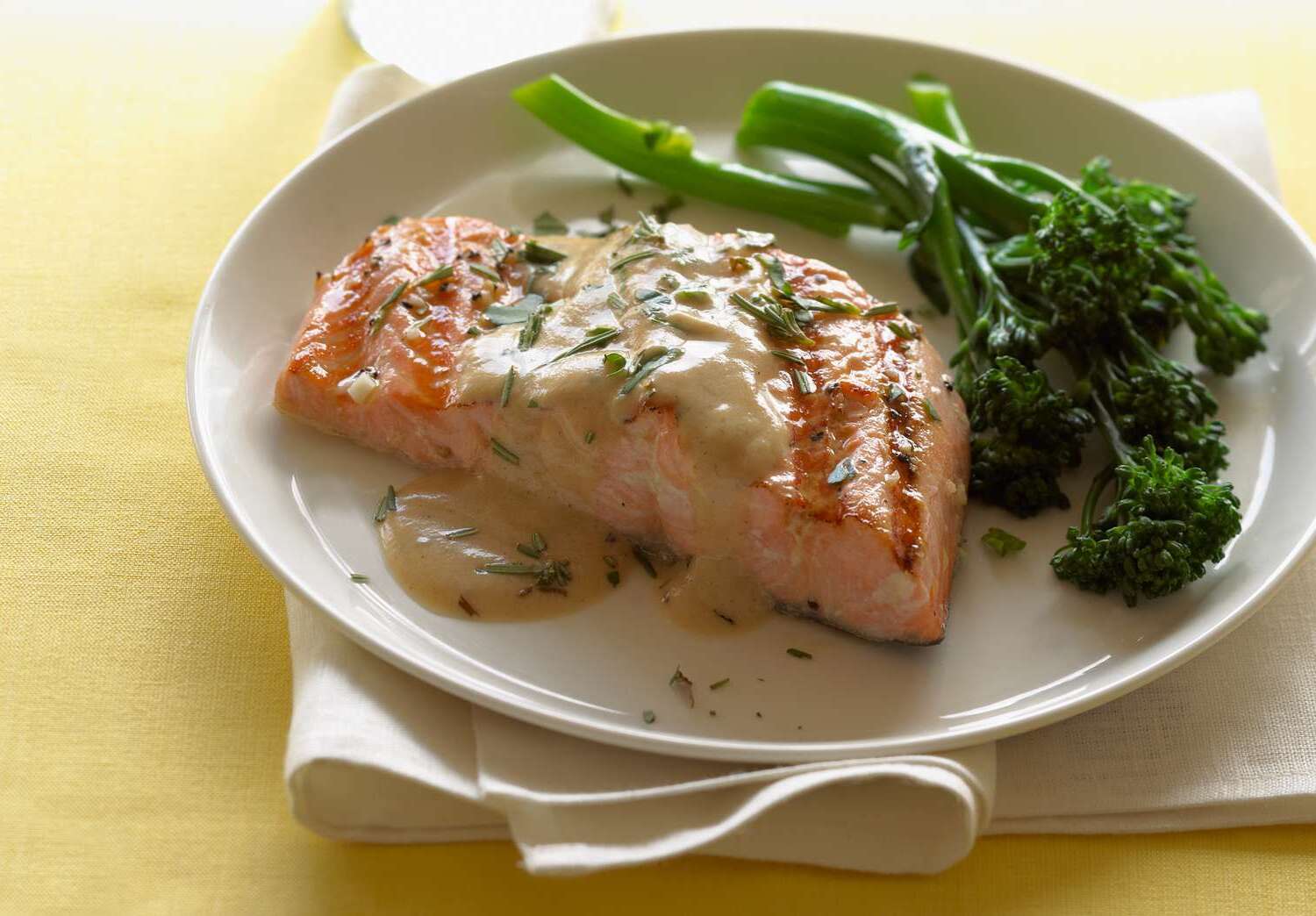
Ingredients for Salmon with Lemon and Dill
Salmon: A rich, fatty fish that is high in omega-3 fatty acids and provides a buttery texture when cooked.
Lemon: Adds a zesty, citrusy flavor that brightens up the dish and complements the richness of the salmon.
Olive oil: Used to drizzle over the salmon, adding a subtle fruity flavor and helping to keep the fish moist during baking.
Salt: Enhances the natural flavors of the salmon and other ingredients.
Black pepper: Adds a mild heat and depth of flavor to the dish.
Dill: A fresh herb with a slightly sweet, grassy flavor that pairs beautifully with fish and lemon.
Technique Tip for This Recipe
When preparing salmon, ensure that the fillets are of uniform thickness to promote even cooking. If the fillets are uneven, consider folding the thinner parts under themselves. This will help prevent overcooking the thinner sections while ensuring the thicker parts are cooked through. Additionally, for a more intense flavor, allow the lemon slices and dill to marinate on the salmon for about 15 minutes before baking. This technique infuses the fish with a deeper citrus and herb essence, enhancing the overall taste.
Suggested Side Dishes
Alternative Ingredients
salmon - Substitute with trout: Trout has a similar texture and flavor profile, making it a good alternative to salmon.
salmon - Substitute with arctic char: Arctic char is closely related to salmon and offers a similar taste and texture.
sliced lemon - Substitute with lime slices: Lime provides a similar acidic and citrusy flavor, which complements the fish well.
sliced lemon - Substitute with orange slices: Orange adds a slightly sweeter citrus note, which can be a pleasant variation.
olive oil - Substitute with grapeseed oil: Grapeseed oil has a neutral flavor and a high smoke point, making it suitable for cooking fish.
olive oil - Substitute with avocado oil: Avocado oil is rich in healthy fats and has a mild flavor, making it a good alternative to olive oil.
salt - Substitute with soy sauce: Soy sauce adds a salty and umami flavor, which can enhance the taste of the fish.
salt - Substitute with sea salt: Sea salt can provide a more complex flavor profile compared to regular table salt.
black pepper - Substitute with white pepper: White pepper has a milder flavor and can be used as a direct substitute for black pepper.
black pepper - Substitute with cayenne pepper: Cayenne pepper adds a bit of heat and spice, offering a different flavor dimension.
chopped fresh dill - Substitute with chopped fresh parsley: Parsley has a fresh and slightly peppery flavor, which can complement the fish well.
chopped fresh dill - Substitute with chopped fresh tarragon: Tarragon has a slightly sweet and anise-like flavor, providing a unique twist to the dish.
Other Alternative Recipes Similar to This Dish
How to Store or Freeze This Dish
- Allow the salmon to cool completely before storing. This helps prevent condensation, which can make the fish soggy.
- Transfer the cooled salmon fillets to an airtight container. If you have multiple fillets, place a piece of parchment paper between each to prevent sticking.
- Store the container in the refrigerator if you plan to consume the salmon within 3 days. For longer storage, proceed to freezing.
- To freeze, wrap each salmon fillet tightly in plastic wrap or aluminum foil. This helps to prevent freezer burn.
- Place the wrapped salmon fillets in a resealable freezer bag. Squeeze out as much air as possible before sealing the bag.
- Label the freezer bag with the date to keep track of freshness. Salmon can be frozen for up to 3 months.
- When ready to use, thaw the salmon in the refrigerator overnight. Avoid thawing at room temperature to maintain the best texture and flavor.
- Reheat the salmon gently in the oven at 275°F (135°C) for about 15 minutes or until warmed through. This helps to retain moisture and prevent overcooking.
- Alternatively, you can reheat the salmon in a skillet over low heat, adding a splash of olive oil to keep it moist.
How to Reheat Leftovers
- Preheat your oven to 275°F (135°C). Place the salmon on a baking sheet lined with parchment paper. Cover it loosely with aluminum foil to retain moisture. Heat for about 15 minutes or until warmed through.
- For a quicker method, use a microwave. Place the salmon on a microwave-safe plate. Cover it with a microwave-safe lid or another plate to prevent drying out. Heat on medium power for 1-2 minutes, checking every 30 seconds to avoid overcooking.
- If you prefer a stovetop method, heat a non-stick skillet over medium-low heat. Add a splash of olive oil or a small pat of butter. Place the salmon in the skillet, cover, and heat for about 5 minutes, flipping halfway through to ensure even reheating.
- For a more gourmet touch, use a steamer. Place the salmon in a steamer basket over simmering water. Cover and steam for about 5-7 minutes, or until heated through. This method helps retain the lemon and dill flavors beautifully.
Best Tools for This Recipe
Oven: Used to bake the salmon fillets at a consistent temperature of 375°F (190°C).
Baking sheet: Provides a flat surface to place the salmon fillets on for baking.
Parchment paper: Lines the baking sheet to prevent the salmon from sticking and makes for easy cleanup.
Knife: Used to slice the lemon and chop the fresh dill.
Cutting board: Provides a safe surface for slicing the lemon and chopping the dill.
Measuring spoons: Ensures accurate measurement of olive oil, salt, and black pepper.
Small bowl: Can be used to mix the olive oil, salt, and pepper before drizzling over the salmon.
Tongs: Useful for placing the lemon slices on top of the salmon fillets.
Oven mitts: Protects your hands when placing the baking sheet in and taking it out of the oven.
How to Save Time on Making This Recipe
Preheat the oven first: Start by preheating your oven to ensure it's ready when you need it.
Use parchment paper: Lining the baking sheet with parchment paper saves cleanup time.
Prep ingredients ahead: Slice the lemon and chop the dill before you start cooking.
Season in one go: Combine olive oil, salt, and black pepper in a small bowl and brush it on the salmon fillets.
Batch cooking: Cook multiple salmon fillets at once to save time for future meals.
Salmon with Lemon and Dill
Ingredients
Main Ingredients
- 4 fillets Salmon about 6 oz each
- 1 Lemon sliced
- 2 tablespoon Olive oil
- 1 teaspoon Salt
- 1 teaspoon Black pepper
- 2 tablespoon Fresh dill chopped
Instructions
- Preheat your oven to 375°F (190°C).
- Line a baking sheet with parchment paper.
- Place the salmon fillets on the baking sheet.
- Drizzle olive oil over the salmon fillets.
- Season with salt and black pepper.
- Place lemon slices on top of the salmon fillets.
- Sprinkle chopped dill over the salmon.
- Bake in the preheated oven for 20 minutes, or until the salmon is cooked through.
Nutritional Value
Keywords
Suggested Appetizers and Desserts for This Recipe
More Amazing Recipes to Try 🙂
- Irish Wheaten Bread Recipe55 Minutes
- Ham Bone and Vegetable Soup Recipe2 Hours 15 Minutes
- Hot Cocoa Mix Recipe10 Minutes
- Simple Syrup Recipe10 Minutes
- Cauliflower Soup Recipe30 Minutes
- Gluten-Free Chicken Soup Recipe45 Minutes
- Toasted Pumpkin Seeds Recipe30 Minutes
- Doughnuts Recipe35 Minutes
Leave a Reply