
I’m really excited to share this simple spaghetti cacio e pepe recipe with you. It’s one of those dishes that feels fancy but is actually super easy to make. I love how just a few ingredients come together to create something so comforting and delicious.
If you haven’t cooked with pecorino romano cheese before, it’s a salty, sharp cheese made from sheep’s milk that adds a lot of flavor to this dish. You can usually find it in the cheese section of most supermarkets. Freshly ground black pepper is key here, so try to get whole peppercorns and grind them yourself for the best taste.
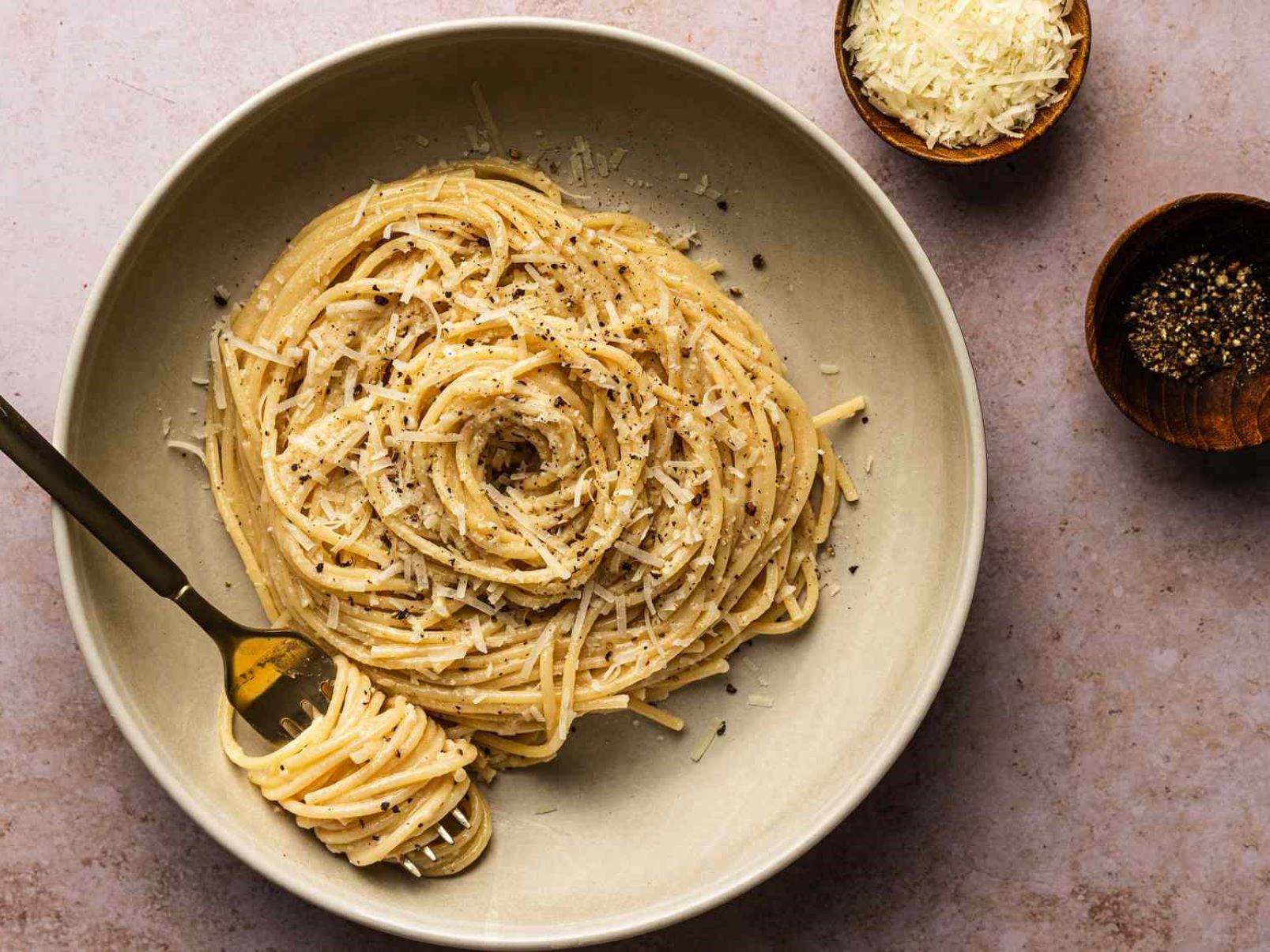
Ingredients For Spaghetti Cacio e Pepe Recipe
Spaghetti: The main pasta that holds all the flavors together.
Pecorino romano cheese: A salty, sharp cheese that melts into a creamy sauce.
Black pepper: Freshly ground for a spicy kick and toasty flavor.
Salt: Used to season the pasta water and bring out the flavors.
Technique Tip for This Recipe
One of the coolest tricks in this Spaghetti Cacio e Pepe recipe is how you use the reserved pasta water to make the sauce creamy and smooth. Here’s how you do it step by step:
- When your spaghetti is cooked just right (that’s called al dente, which means it’s still a little firm), don’t throw away all the water you boiled it in. Scoop out about a cup of that water before you drain the pasta.
- After you toast the black pepper and add the spaghetti to the skillet, pour in about half a cup of that reserved pasta water.
- Toss everything together so the water mixes with the pepper and pasta.
- When you add the finely grated pecorino romano cheese, toss quickly off the heat and add more pasta water if you need it. This helps the cheese melt into a creamy sauce instead of clumping up.
Why does this work? The starchy water from cooking the pasta acts like a glue that helps the cheese stick to the noodles and makes the sauce silky instead of lumpy. Without it, your cheese might just sit on top or get clumpy, which isn’t as tasty or pretty.
I remember the first time I tried this, I didn’t save any pasta water and ended up with a dry, crumbly mess. It was a bummer! Now, I always keep some water handy and add it little by little. It’s like magic how it turns simple ingredients into a smooth, cheesy sauce. Plus, it saves you from adding extra butter or cream, keeping the dish light and fresh. Give it a try—you’ll see how much better your Cacio e Pepe turns out!
Suggested Side Dishes
Alternative Ingredients
spaghetti - Substitute with linguine: Linguine has a similar shape and texture, making it a good alternative for spaghetti in pasta dishes like cacio e pepe.
spaghetti - Substitute with fettuccine: Fettuccine's flat and thick texture can hold the cheese and pepper sauce well, providing a similar mouthfeel to spaghetti.
pecorino romano cheese - Substitute with parmesan cheese: Parmesan has a similar salty and nutty flavor, though slightly milder, making it a suitable replacement for pecorino romano.
pecorino romano cheese - Substitute with grana padano: Grana Padano offers a comparable texture and flavor profile, though it is less sharp than pecorino romano.
freshly ground black pepper - Substitute with white pepper: White pepper provides a similar heat and flavor, though it is slightly milder and less pungent than black pepper.
freshly ground black pepper - Substitute with pink peppercorns: Pink peppercorns offer a fruity and slightly spicy flavor, adding a unique twist to the traditional cacio e pepe dish.
Alternative Recipes Similar to This Dish
How to Store or Freeze This Dish
Allow the spaghetti cacio e pepe to cool to room temperature before storing. This prevents condensation, which can make the dish soggy.
Transfer the spaghetti into an airtight container. If you have a large batch, consider dividing it into smaller portions for easier reheating.
Store the container in the refrigerator for up to 3 days. The pecorino romano cheese may thicken the sauce as it cools, so be prepared to adjust the texture when reheating.
To reheat, place the spaghetti in a skillet over low heat. Add a splash of water or olive oil to help loosen the sauce, stirring gently until warmed through.
For freezing, ensure the spaghetti is completely cooled. Place it in a freezer-safe container or a heavy-duty freezer bag, removing as much air as possible to prevent freezer burn.
Label the container with the date to keep track of its freshness. The spaghetti can be frozen for up to 2 months.
When ready to enjoy, thaw the spaghetti overnight in the refrigerator. Reheat using the same method as refrigerated leftovers, adding a bit of water or olive oil to restore its creamy texture.
Remember, while freezing is an option, the dish is best enjoyed fresh to savor the full flavor of the pecorino romano cheese and black pepper.
How to Reheat Leftovers
Stovetop method: Begin by adding a splash of reserved pasta water or a bit of olive oil to a skillet over low heat. Add the leftover spaghetti cacio e pepe and gently toss it in the skillet. The goal is to rehydrate the pasta and revive the creamy sauce. Stir continuously until the pasta is heated through, adding more liquid if necessary to maintain the sauce's creamy texture.
Microwave method: Place the spaghetti cacio e pepe in a microwave-safe dish. Add a tablespoon of water or olive oil to help keep the pasta moist. Cover the dish with a microwave-safe lid or a damp paper towel to trap steam. Heat on medium power in 30-second intervals, stirring in between, until the pasta is warmed through. Be cautious not to overheat, as this can cause the cheese to separate.
Oven method: Preheat your oven to 350°F (175°C). Transfer the spaghetti cacio e pepe to an oven-safe dish. Add a splash of pasta water or a drizzle of olive oil to help maintain moisture. Cover the dish with aluminum foil to prevent the pasta from drying out. Heat in the oven for about 10-15 minutes, or until the pasta is thoroughly warmed. Stir halfway through to ensure even heating.
Double boiler method: For a gentle reheating approach, use a double boiler. Fill the bottom pot with water and bring it to a simmer. Place the spaghetti cacio e pepe in the top pot, ensuring it doesn't touch the water. Stir occasionally, allowing the steam to gently warm the pasta and revive the sauce without direct heat. This method is excellent for preserving the creamy texture of the dish.
Essential Tools for Making This Recipe
Large pot: Use this to boil the water and cook the spaghetti until it reaches the perfect al dente texture.
Skillet: This is essential for toasting the black pepper and combining it with the spaghetti to create the base of the sauce.
Tongs: Handy for tossing the spaghetti with the cheese and pepper, ensuring an even coating of the creamy sauce.
Cheese grater: Necessary for finely grating the pecorino romano cheese, which is crucial for achieving a smooth sauce.
Measuring cup: Use this to reserve the pasta water, which is key to creating the creamy consistency of the sauce.
Pepper mill: Ideal for freshly grinding black pepper, which enhances the flavor of the dish significantly.
Serving plate: Once the spaghetti is perfectly coated with the sauce, this is where you’ll present your delicious creation.
Time-Saving Tips for This Recipe
Pre-grate the cheese: Save time by pre-grating the pecorino romano cheese and storing it in an airtight container in the fridge.
Use a kettle: Boil water in a kettle first, then pour it into the pot to speed up the process of cooking spaghetti.
Toast pepper in advance: Toast the black pepper ahead of time and store it in a small container to quickly add flavor when needed.
Reserve pasta water: Always reserve more pasta water than needed to ensure you have enough for a creamy sauce.
Spaghetti Cacio e Pepe
Ingredients
Main Ingredients
- 400 g spaghetti
- 200 g Pecorino Romano cheese finely grated
- 2 teaspoon black pepper freshly ground
- to taste salt
Instructions
- Bring a large pot of salted water to a boil. Add the spaghetti and cook until al dente. Reserve 1 cup of pasta water, then drain the pasta.
- In a large skillet over medium heat, toast the black pepper for about 1 minute.
- Add the cooked spaghetti to the skillet along with ½ cup of the reserved pasta water. Toss to combine.
- Remove from heat and add the grated Pecorino Romano cheese. Toss quickly to combine, adding more pasta water if needed to create a creamy sauce.
- Serve immediately, garnished with additional cheese and black pepper if desired.
Nutritional Value
Keywords
Suggested Appetizers and Desserts
More Amazing Recipes to Try 🙂
- Broccoli Rice Cheese and Chicken Casserole Recipe45 Minutes
- Sweet Sticky and Spicy Chicken Recipe45 Minutes
- Lentil Ham Soup Recipe1 Hours 15 Minutes
- Hot Beef Sandwiches Recipe30 Minutes
- Mexican Steak Torta Recipe30 Minutes
- Irish Wheaten Bread Recipe55 Minutes
- Ham Bone and Vegetable Soup Recipe2 Hours 15 Minutes
- Hot Cocoa Mix Recipe10 Minutes










Leave a Reply