
I love making souse because it’s a simple dish that brings a lot of flavor and comfort. It’s one of those recipes that feels like a warm hug from the inside. I can’t wait for you to try it and enjoy the mix of tangy and savory tastes.
Most of the ingredients in this recipe are easy to find, but if you don’t usually keep white vinegar or ground allspice at home, you might want to pick those up at the supermarket. White vinegar gives the dish its signature tang, and allspice adds a warm, slightly sweet flavor that makes the souse special.
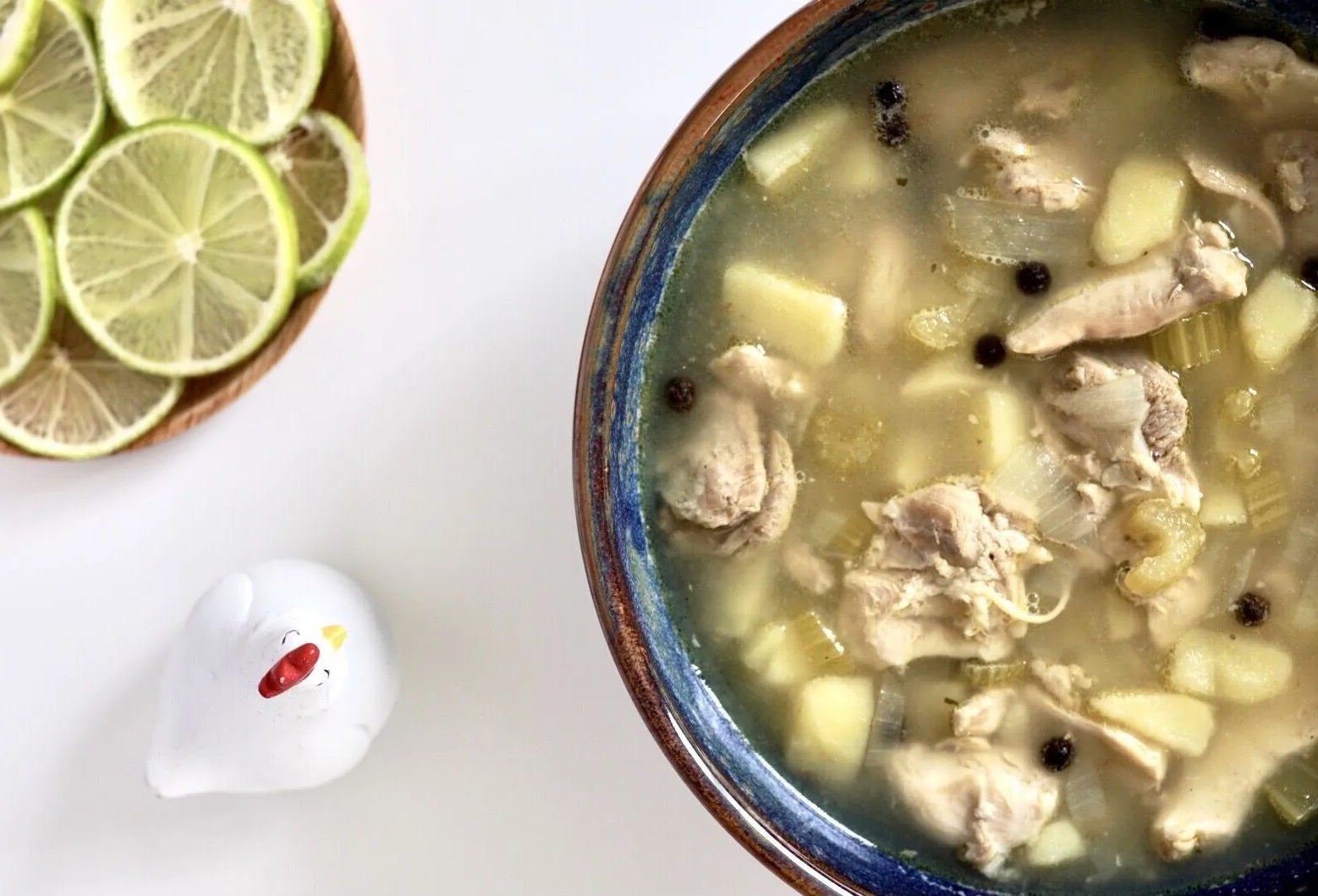
Ingredients For Souse Recipe
Pork shoulder: This cut of meat is tender and flavorful, perfect for slow cooking until it’s soft and juicy.
White vinegar: Adds a sharp, tangy taste that balances the richness of the pork.
Water: Used to simmer the meat and blend the flavors.
Salt: Enhances all the flavors in the dish.
Crushed black pepper: Gives a mild heat and depth to the souse.
Garlic: Adds a fragrant and savory note.
Onion: Brings sweetness and texture to the dish.
Ground allspice: Offers a warm, slightly sweet spice that complements the other seasonings.
Technique Tip for This Recipe
One helpful trick for making this Souse Recipe is how to get your onion sliced just right. When the onion is sliced evenly, it cooks more evenly and adds a nice texture to the dish. Here’s a simple way to slice your onion:
- Cut off the top of the onion (the pointy end) but leave the root end intact. This helps hold the layers together while you slice.
- Peel off the outer skin carefully.
- Place the onion flat side down on your cutting board.
- Using a sharp knife, slice the onion from top to bottom into even pieces. Try to keep your slices about the same thickness so they cook at the same speed.
Doing this makes your onion cook evenly with the other ingredients like the pork shoulder and spices. If the slices are different sizes, some parts might get mushy while others stay crunchy, which can change the texture of your Souse.
When I first started cooking, I used to slice the onion all different sizes because I was rushing. The result was a bit uneven, and some bites were stronger than others. Now, I take a little extra time to slice carefully, and it really makes the whole dish taste better and look nicer. Plus, it’s kind of relaxing to focus on slicing evenly—it’s like a little cooking meditation!
So next time you’re making this Souse Recipe, try slicing your onion this way. It’s a small step that makes a big difference in how your dish turns out.
Suggested Side Dishes
Alternative Ingredients
pork shoulder - Substitute with chicken thighs: Chicken thighs have a similar texture and can absorb flavors well, making them a good alternative.
white vinegar - Substitute with apple cider vinegar: Apple cider vinegar has a similar acidity and can add a slightly fruity note to the dish.
water - Substitute with chicken broth: Chicken broth adds more depth and flavor compared to plain water.
salt - Substitute with soy sauce: Soy sauce can add both saltiness and umami, enhancing the overall flavor profile.
crushed black pepper - Substitute with crushed white pepper: White pepper has a similar heat but a slightly different flavor, which can add a unique twist.
minced garlic - Substitute with garlic powder: Garlic powder can provide a similar garlic flavor, though it may be less pungent.
sliced onion - Substitute with shallots: Shallots have a milder and sweeter flavor, which can complement the dish well.
ground allspice - Substitute with ground cloves: Ground cloves have a similar warm, spicy flavor, though they are slightly more intense.
Other Alternative Recipes Similar to This Dish
How to Store / Freeze This Dish
- Allow the souse to cool completely before storing. This helps maintain the texture and flavor of the pork shoulder.
- Transfer the cooled souse into an airtight container. Glass containers with tight-fitting lids are ideal for preserving the taste and preventing any odors from escaping.
- Store the container in the refrigerator. The souse can be kept refrigerated for up to 5 days, ensuring it remains fresh and flavorful.
- For longer storage, consider freezing the souse. Portion the souse into smaller, freezer-safe containers or heavy-duty freezer bags. This makes it easier to thaw only what you need.
- Label each container or bag with the date of preparation. This helps you keep track of how long the souse has been stored.
- When ready to use, thaw the souse in the refrigerator overnight. Avoid thawing at room temperature to prevent any risk of bacterial growth.
- Once thawed, the souse can be enjoyed cold as originally intended. If you prefer, you can gently reheat it on the stove over low heat, but be mindful that reheating may alter the texture slightly.
- Always ensure that any leftovers are promptly returned to the refrigerator or freezer to maintain food safety and quality.
How to Reheat Leftovers
Stovetop Method:
- Place the souse in a saucepan.
- Add a splash of water or broth to keep it moist.
- Heat over medium-low heat, stirring occasionally, until warmed through.
Microwave Method:
- Transfer the souse to a microwave-safe dish.
- Cover with a microwave-safe lid or plastic wrap with a few holes poked in it.
- Heat on medium power for 2-3 minutes, stirring halfway through, until hot.
Oven Method:
- Preheat your oven to 300°F (150°C).
- Place the souse in an oven-safe dish and cover with aluminum foil.
- Bake for about 20-30 minutes, or until heated through.
Slow Cooker Method:
- Transfer the souse to your slow cooker.
- Set to low and heat for 1-2 hours, stirring occasionally, until thoroughly warmed.
Sous Vide Method:
- Place the souse in a vacuum-sealed bag.
- Set your sous vide machine to 140°F (60°C).
- Submerge the bag in the water bath and heat for about 1 hour, until hot.
Best Tools for This Recipe
Large pot: A large pot is essential for combining and cooking the pork shoulder with the other ingredients. It should be big enough to hold all the ingredients and allow them to simmer without overflowing.
Measuring cups: Measuring cups are used to accurately measure the vinegar and water to ensure the correct proportions in the recipe.
Measuring spoons: Measuring spoons are necessary for measuring out the salt, black pepper, and ground allspice to maintain the recipe's flavor balance.
Knife: A knife is needed to cut the pork shoulder into chunks and to slice the onion.
Cutting board: A cutting board provides a safe and clean surface for cutting the pork shoulder and slicing the onion.
Garlic press: A garlic press can be used to mince the garlic cloves quickly and efficiently.
Stirring spoon: A stirring spoon is used to mix the ingredients in the pot and to occasionally stir the mixture as it simmers.
Lid: A lid for the pot helps to control the simmering process and prevents too much liquid from evaporating.
Tongs: Tongs are useful for handling the hot pork chunks when checking for tenderness or removing them from the pot.
Serving dish: A serving dish is used to present the souse once it has cooled down and is ready to be served cold.
How to Save Time on Making This Recipe
Pre-cut ingredients: Prepare and cut the pork shoulder and slice the onion the night before to save time on the cooking day.
Use a pressure cooker: Reduce cooking time by using a pressure cooker instead of simmering for 2 hours. This can cut the cooking time by more than half.
Batch cooking: Make a larger batch and freeze portions for future meals. This way, you only need to cook once and enjoy multiple times.
Pre-measure spices: Measure out the salt, black pepper, and allspice ahead of time and store them in small containers or bags.
Souse Recipe
Ingredients
Main Ingredients
- 2 lbs Pork Shoulder cut into chunks
- 1 cup White Vinegar
- 1 cup Water
- 1 tablespoon Salt
- 1 teaspoon Black Pepper crushed
- 2 cloves Garlic minced
- 1 medium Onion sliced
- 1 teaspoon Allspice ground
Instructions
- 1. In a large pot, combine the pork shoulder, vinegar, water, salt, black pepper, garlic, onion, and allspice.
- 2. Bring to a boil, then reduce heat and simmer for about 2 hours, or until the meat is tender.
- 3. Remove from heat and let cool. Serve cold.
Nutritional Value
Keywords
Suggested Appetizers and Desserts for This Dish
More Amazing Recipes to Try 🙂
- Beef Ribs Recipe3 Hours 15 Minutes
- Egg in a Hole Recipe10 Minutes
- Strawberry Chicken Salad Recipe25 Minutes
- Turkey Brine Recipe15 Minutes
- Vegan Breaded Tofu Recipe35 Minutes
- Air Fryer Vegan Buffalo Cauliflower Recipe30 Minutes
- Lemon Posset Recipe15 Minutes
- Banana Coconut Loaf Recipe1 Hours 15 Minutes









Leave a Reply