
I’m really excited to share this inside-out spicy tuna and avocado sushi recipe with you. It’s one of my favorite dishes because it’s fresh, flavorful, and fun to make at home. Scroll down to see how simple it is to create sushi that tastes like it’s from a restaurant!
Some ingredients in this recipe might be new if you haven’t made sushi before. Sushi-grade tuna is a special kind of fish that’s safe to eat raw, so look for it at the seafood counter or a trusted grocery store. Nori sheets are dried seaweed used to wrap sushi, and you can usually find them in the Asian foods aisle. If you don’t have rice vinegar or toasted sesame seeds, those are good to pick up too—they add a lot of flavor to the sushi rice and the roll.
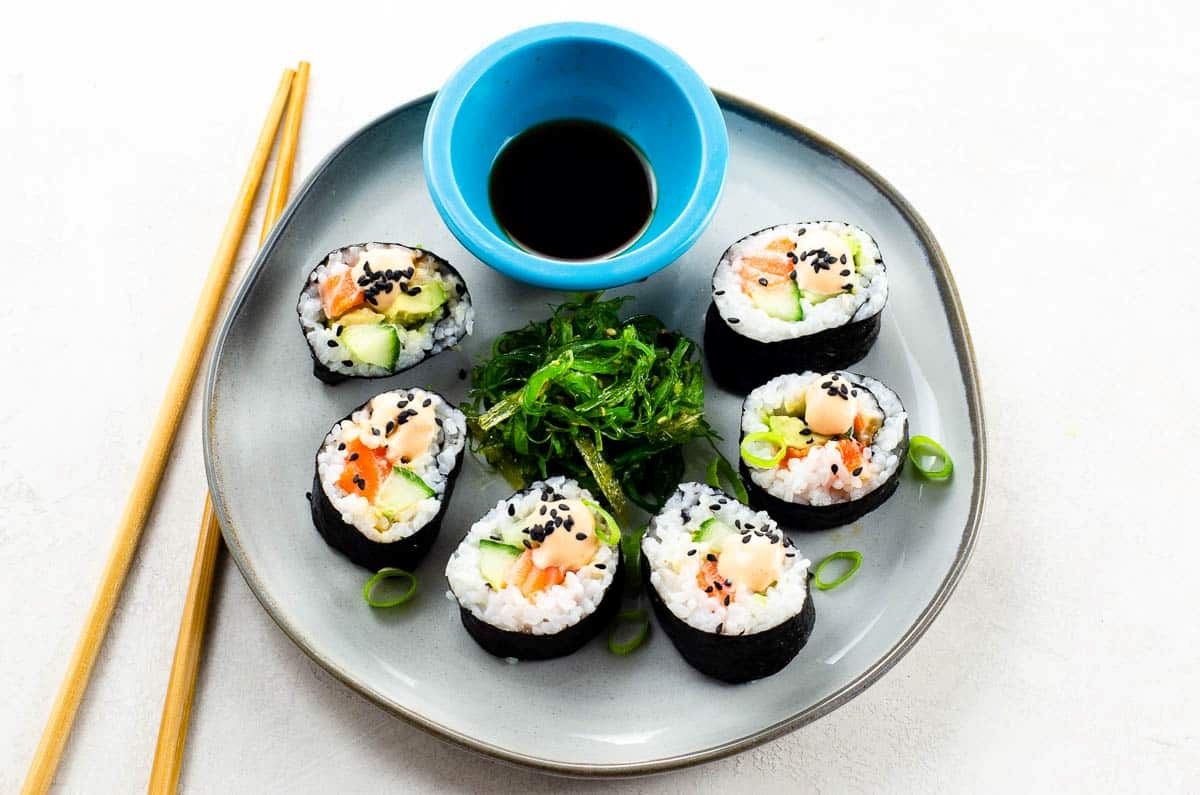
Ingredients for Inside-Out Spicy Tuna and Avocado Sushi
Sushi rice: This is a short-grain rice that becomes sticky when cooked, perfect for making sushi rolls.
Rice vinegar: Adds a tangy flavor to the rice and helps it stick together.
Sugar: Balances the vinegar’s acidity and gives the rice a slight sweetness.
Salt: Enhances the overall flavor of the rice.
Sushi-grade tuna: Fresh, high-quality tuna safe to eat raw, which is the star of the spicy filling.
Sriracha: A spicy chili sauce that gives the tuna a nice kick.
Mayonnaise: Adds creaminess to the spicy tuna mixture.
Avocado: Provides a smooth, buttery texture that pairs perfectly with the spicy tuna.
Nori: Thin sheets of dried seaweed used to wrap the sushi.
Toasted sesame seeds: Adds a nutty flavor and a little crunch on top of the roll.
Technique Tip for Perfect Sushi
One of the trickiest parts of making inside-out sushi is rolling it tightly without squishing everything out. Here’s a simple way to get that perfect roll every time:
- Lay a sheet of plastic wrap on your sushi mat first. This keeps the rice from sticking to the mat and makes rolling smoother.
- Spread the sushi rice evenly over the plastic wrap, pressing gently but firmly so it sticks together.
- Place the nori sheet on top of the rice, shiny side down.
- Arrange your spicy tuna mixture and avocado slices in a neat line along the bottom edge of the nori.
- Now, lift the edge of the mat closest to you and start rolling it over the filling, using your fingers to keep the ingredients in place.
- Press down gently as you roll to keep everything tight, but don’t squeeze too hard or the filling will squish out.
- Once rolled, give the mat a little squeeze all around to shape the roll evenly.
Doing this helps keep your sushi neat and easy to slice. If the roll is too loose, it falls apart when you cut it, and if it’s too tight, the filling gets squished and loses its texture. Getting the right pressure makes your sushi look and taste better.
When I first tried rolling sushi, I pressed way too hard and ended up with a flat, messy roll. Using plastic wrap was a game changer—it stops the rice from sticking and makes rolling less stressful. Plus, it’s easier to clean up afterward! If you don’t have a sushi mat, you can use a clean kitchen towel wrapped in plastic wrap instead. Just take your time and don’t worry if your first few rolls aren’t perfect—they get better with practice!
Suggested Side Dishes
Alternative Ingredients
sushi rice - Substitute with short-grain rice: Short-grain rice has a similar sticky texture that is essential for making sushi.
rice vinegar - Substitute with apple cider vinegar: Apple cider vinegar has a mild acidity that can mimic the flavor profile of rice vinegar.
sugar - Substitute with honey: Honey can provide the necessary sweetness, although it will add a slightly different flavor.
salt - Substitute with soy sauce: Soy sauce can add a salty and umami flavor, enhancing the overall taste of the sushi.
sushi-grade tuna - Substitute with sushi-grade salmon: Salmon has a similar texture and richness, making it a good alternative for tuna.
sriracha - Substitute with chili garlic sauce: Chili garlic sauce provides a similar heat and flavor profile to sriracha.
mayonnaise - Substitute with Greek yogurt: Greek yogurt can provide a creamy texture with a slight tang, similar to mayonnaise.
avocado - Substitute with cucumber: Cucumber offers a fresh, crisp texture that can complement the other ingredients well.
nori - Substitute with soy paper: Soy paper can be used as a wrap and offers a neutral flavor, making it a good alternative to nori.
toasted sesame seeds - Substitute with chia seeds: Chia seeds can provide a similar crunch and nutty flavor when toasted.
Other Alternative Recipes Similar to This Sushi
How To Store / Freeze Your Sushi
Storing Guidelines:
- Refrigeration:
- Place the sushi rolls in an airtight container to maintain freshness.
- Store in the refrigerator for up to 24 hours. Beyond this, the sushi rice may harden, and the tuna may lose its optimal texture.
- If you have leftover avocado, sprinkle it with a bit of lemon juice to prevent browning before storing.
- Separation:
- Keep the soy sauce, pickled ginger, and wasabi in separate containers to avoid sogginess and flavor mixing.
- Moisture Control:
- Place a damp paper towel over the sushi before sealing the container to maintain moisture levels.
- Refrigeration:
Freezing Guidelines:
- Preparation:
- Before freezing, wrap each sushi roll tightly in plastic wrap to prevent freezer burn.
- Place the wrapped rolls in a freezer-safe bag or container.
- Freezing Duration:
- Freeze for up to 1 month for best quality. Note that the texture of the avocado may change slightly upon thawing.
- Thawing:
- To thaw, transfer the sushi from the freezer to the refrigerator and let it thaw slowly overnight.
- Avoid microwaving as it can alter the texture of the rice and tuna.
- Serving:
- Once thawed, consume immediately for the best taste and texture.
- Refresh the sushi by sprinkling a few drops of rice vinegar on the rice if it feels dry.
- Preparation:
How To Reheat Leftovers
Cold Method:
- If you prefer to enjoy your sushi cold, simply take it out of the refrigerator and let it sit at room temperature for about 15-20 minutes. This will help the flavors to meld and the rice to soften slightly without compromising the texture of the tuna and avocado.
Microwave Method:
- Place the sushi pieces on a microwave-safe plate.
- Cover them with a damp paper towel to prevent the rice from drying out.
- Microwave on low power (about 30-40% power) for 10-15 seconds. This will gently warm the rice without cooking the tuna.
Steaming Method:
- Place the sushi pieces in a bamboo steamer lined with parchment paper.
- Steam over boiling water for about 1-2 minutes. This method helps to warm the rice and avocado while keeping the tuna cool and fresh.
Oven Method:
- Preheat your oven to 200°F (93°C).
- Place the sushi pieces on a baking sheet lined with parchment paper.
- Warm in the oven for about 5-7 minutes. This method is gentle and helps to maintain the integrity of the sushi.
Room Temperature Method:
- Simply let the sushi sit out at room temperature for about 30 minutes before eating. This allows the rice to soften and the flavors to come together without any additional heat.
Essential Tools for Making This Sushi
Sushi mat: A bamboo mat used to roll the sushi tightly and evenly.
Plastic wrap: Placed on the sushi mat to prevent the rice from sticking to the mat.
Rice cooker: Used to cook the sushi rice to the perfect consistency.
Mixing bowl: For mixing the cooked rice with rice vinegar, sugar, and salt.
Sharp knife: Essential for slicing the sushi roll into bite-sized pieces cleanly.
Cutting board: Provides a stable surface for slicing the sushi rolls.
Measuring cups: Used to measure the rice, vinegar, sugar, and other ingredients accurately.
Measuring spoons: For measuring smaller quantities of ingredients like salt, sriracha, and mayonnaise.
Spatula: Helps in spreading the rice evenly on the plastic wrap.
Mixing spoon: Used to mix the tuna with sriracha and mayonnaise.
Serving plate: For presenting the sliced sushi rolls attractively.
Soy sauce dish: Small dish for serving soy sauce alongside the sushi.
Pickled ginger dish: Small dish for serving pickled ginger as a palate cleanser.
Wasabi dish: Small dish for serving wasabi to add a spicy kick to the sushi.
How to Save Time on Making This Sushi
Prepare ingredients in advance: Dice the tuna and slice the avocado ahead of time to streamline the assembly process.
Use pre-made sushi rice: Opt for pre-cooked sushi rice available at some grocery stores to save cooking time.
Organize your workspace: Lay out all your ingredients and tools before starting to ensure a smooth workflow.
Use a sharp knife: A sharp knife makes slicing the sushi rolls quicker and cleaner, reducing prep time.
Double the recipe: Make extra sushi rolls and refrigerate for a quick meal later in the week.
Inside-Out Spicy Tuna and Avocado Sushi
Ingredients
Main Ingredients
- 2 cups Sushi Rice
- ¼ cup Rice Vinegar
- ¼ cup Sugar
- 1 teaspoon Salt
- ½ lb Sushi-grade Tuna diced
- 2 tablespoon Sriracha
- 1 tablespoon Mayonnaise
- 1 Avocado sliced
- 4 sheets Nori
- ¼ cup Sesame Seeds toasted
Instructions
- 1. Cook sushi rice according to package instructions. Once cooked, mix with rice vinegar, sugar, and salt. Let it cool.
- 2. In a bowl, mix diced tuna with sriracha and mayonnaise.
- 3. Place a sheet of plastic wrap on a sushi mat. Spread a layer of rice on the plastic wrap, then place a nori sheet on top.
- 4. Arrange tuna mixture and avocado slices in a line along the bottom edge of the nori.
- 5. Roll the sushi tightly using the mat. Sprinkle sesame seeds on top.
- 6. Slice the roll into bite-sized pieces with a sharp knife. Serve with soy sauce, pickled ginger, and wasabi.
Nutritional Value
Keywords
Suggested Appetizers and Desserts for This Sushi
More Amazing Recipes to Try 🙂
- Sweet Sticky and Spicy Chicken Recipe45 Minutes
- Lentil Ham Soup Recipe1 Hours 15 Minutes
- Hot Beef Sandwiches Recipe30 Minutes
- Mexican Steak Torta Recipe30 Minutes
- Irish Wheaten Bread Recipe55 Minutes
- Ham Bone and Vegetable Soup Recipe2 Hours 15 Minutes
- Hot Cocoa Mix Recipe10 Minutes
- Simple Syrup Recipe10 Minutes




Leave a Reply