

I love this Indian saag recipe because it’s a simple way to enjoy a lot of greens in one dish. It’s warm, comforting, and full of flavor that feels like a big, cozy hug. I can’t wait for you to try it and see how easy it is to make something healthy and tasty at home.
Some ingredients like mustard greens and ghee might not be in every kitchen. Mustard greens have a slightly spicy, peppery taste and can usually be found in the fresh produce section or at an Indian grocery store. Ghee is clarified butter and adds a rich flavor; you can find it in the dairy aisle or specialty food stores. If you don’t have these, you can use regular butter instead, but the taste will be a bit different.
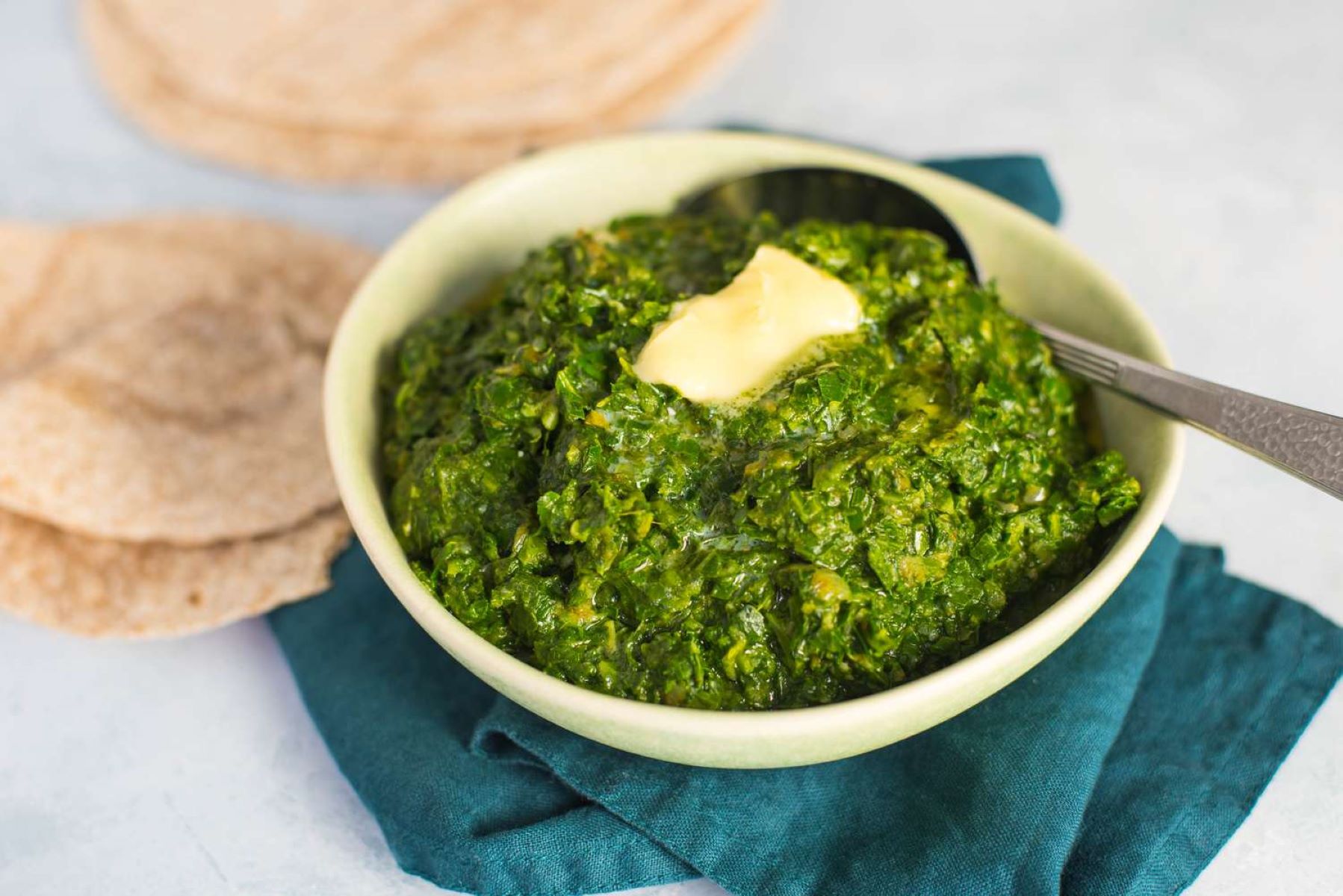
Ingredients For Indian Saag Recipe
Spinach: A leafy green that is mild and soft, it forms the base of this dish.
Mustard greens: These add a peppery kick and are a key part of traditional saag.
Onion: Adds sweetness and depth when cooked.
Garlic: Gives a strong, savory flavor.
Ginger: Adds a fresh, slightly spicy warmth.
Ghee: Clarified butter that brings richness and a nutty aroma.
Cumin seeds: Small seeds that add earthiness and a bit of crunch.
Turmeric powder: A bright yellow spice that adds color and a mild, warm flavor.
Garam masala: A blend of spices that gives the dish its signature warmth and complexity.
Salt: Enhances all the flavors.
Technique Tip for This Dish
One of the most important steps in this Indian Saag Recipe is sautéing the onions, garlic, and ginger until the onions turn golden brown. Here’s how to do it right:
- Heat your ghee in a large pot over medium heat. Make sure the pot is hot but not smoking.
- Add the cumin seeds first and wait for them to start popping or spluttering. This releases their flavor.
- Then add the chopped onions, minced garlic, and grated ginger.
- Stir everything often so the onions cook evenly and don’t burn.
- Keep cooking until the onions turn a nice golden brown color. This usually takes about 7 to 10 minutes.
Why does this matter? When you cook the onions slowly until golden, they become sweet and soft, which adds a rich, deep flavor to the whole dish. If you rush this step or cook on too high heat, the onions might burn and taste bitter, which can spoil the flavor of your saag.
A little tip from me: I used to get impatient and turn the heat up to cook the onions faster, but that just made them burn on the edges. Now I keep the heat medium and stir often, and the smell while cooking is so good—it makes me even more excited to eat! Also, if you want to save time, you can chop your onions and prepare the garlic and ginger ahead of time, so everything goes smoothly when you start cooking.
This simple step really helps your saag taste amazing and makes the cooking feel like a fun little project. Give it a try!
Suggested Side Dishes
Alternative Ingredients
spinach - Substitute with kale: Kale has a similar texture and can provide a slightly different but still earthy flavor to the dish.
mustard greens - Substitute with collard greens: Collard greens have a similar bitterness and can mimic the texture of mustard greens when cooked.
chopped onion - Substitute with shallots: Shallots offer a milder onion flavor and can add a subtle sweetness to the dish.
minced garlic - Substitute with garlic powder: Garlic powder can provide the garlic flavor without the texture, though it is less pungent.
grated ginger - Substitute with ground ginger: Ground ginger can be used in smaller quantities to provide a similar warmth and spice.
ghee - Substitute with butter: Butter can mimic the richness of ghee, though it lacks the nutty flavor.
cumin seeds - Substitute with ground cumin: Ground cumin can provide the same earthy flavor, though it will not have the same texture as whole seeds.
turmeric powder - Substitute with saffron: Saffron can add a different but equally vibrant color and a unique flavor, though it is more expensive.
garam masala - Substitute with curry powder: Curry powder can provide a similar blend of spices, though the flavor profile may vary slightly.
salt - Substitute with soy sauce: Soy sauce can add saltiness along with a depth of umami flavor.
Alternative Recipes Similar to This Dish
How to Store or Freeze This Dish
Allow the saag to cool completely before storing. This helps prevent condensation, which can lead to spoilage.
Transfer the saag into an airtight container. Choose a container that is just the right size to minimize air exposure, which can affect the flavor and texture.
For short-term storage, place the container in the refrigerator. The saag will stay fresh for up to 3 days, making it a convenient option for meal prep.
For longer storage, consider freezing the saag. Use freezer-safe containers or heavy-duty freezer bags. If using bags, lay them flat to save space and ensure even freezing.
Label the containers or bags with the date of preparation. This will help you keep track of how long the saag has been stored.
When ready to enjoy, thaw the saag in the refrigerator overnight. This gradual thawing helps maintain the texture and flavor.
Reheat the saag gently on the stove over low heat. Stir occasionally to ensure even heating and to prevent sticking.
If the saag appears too thick after reheating, add a splash of water or vegetable broth to achieve the desired consistency.
Taste and adjust the seasoning if necessary, as freezing can sometimes dull the flavors. A pinch of salt or a dash of garam masala can revive the dish.
Serve the reheated saag with freshly made roti or rice for a comforting meal.
How to Reheat Leftovers
Gently reheat the saag on the stovetop: Place the saag in a saucepan over low heat. Stir occasionally to ensure even heating and prevent sticking. Add a splash of water or a bit of ghee if it seems too thick, to restore its creamy consistency.
Use the microwave for convenience: Transfer the saag to a microwave-safe dish. Cover it with a microwave-safe lid or wrap. Heat on medium power for 1-2 minutes, stirring halfway through. This helps in distributing the heat evenly and avoids overheating.
Steam it for a gentle touch: Place the saag in a heatproof bowl and set it over a pot of simmering water. Cover the bowl and let the steam gently warm the saag. This method helps retain moisture and prevents the saag from drying out.
Oven method for a larger batch: Preheat the oven to 300°F (150°C). Place the saag in an oven-safe dish, cover with foil, and heat for about 15-20 minutes. Stir halfway through to ensure even warming.
Double boiler technique for a delicate approach: Use a double boiler by placing the saag in the top section and simmering water in the bottom. Stir occasionally as it warms, ensuring a gentle and even reheating process.
Essential Tools for This Recipe
Large pot: Used for cooking the greens and sautéing the spices, providing enough space for the ingredients to mix well.
Blender: Essential for blending the cooked greens into a smooth consistency, ensuring a creamy texture for the saag.
Knife: Necessary for chopping the spinach, mustard greens, and onion, allowing for precise and efficient preparation.
Cutting board: Provides a stable surface for chopping vegetables, keeping your kitchen counter safe and clean.
Grater: Used for grating the ginger, which helps to release its flavor more effectively into the dish.
Measuring spoons: Ensures accurate measurement of spices like cumin seeds, turmeric powder, and garam masala, contributing to the dish's balanced flavor.
Spatula: Handy for stirring the ingredients in the pot, ensuring even cooking and preventing sticking.
Serving spoon: Useful for serving the saag once it's ready, making it easy to portion out with roti or rice.
Time-Saving Tips for This Recipe
Prep greens in advance: Wash and chop spinach and mustard greens ahead of time. Store them in the fridge to save time during cooking.
Use a food processor: Instead of manually chopping, use a food processor for the onion, garlic, and ginger to speed up the process.
Batch cook: Double the recipe and freeze portions for quick meals later. This saves time on future cooking.
Pre-measure spices: Measure out cumin seeds, turmeric powder, and garam masala before starting to streamline the cooking process.
Indian Saag Recipe
Ingredients
Main Ingredients
- 500 g Spinach
- 200 g Mustard Greens
- 1 medium Onion chopped
- 2 cloves Garlic minced
- 1 inch Ginger grated
- 2 tablespoon Ghee
- 1 teaspoon Cumin Seeds
- 1 teaspoon Turmeric Powder
- 1 teaspoon Garam Masala
- to taste Salt
Instructions
- 1. Wash and chop the spinach and mustard greens.
- 2. Heat ghee in a large pot over medium heat. Add cumin seeds and let them splutter.
- 3. Add chopped onions, garlic, and ginger. Sauté until onions are golden brown.
- 4. Add turmeric powder and mix well.
- 5. Add the chopped greens and cook until they wilt down.
- 6. Transfer the mixture to a blender and blend until smooth.
- 7. Return the blended mixture to the pot, add garam masala, and salt to taste. Simmer for 10 minutes.
- 8. Serve hot with roti or rice.
Nutritional Value
Keywords
Suggested Appetizers and Desserts
More Amazing Recipes to Try 🙂
- Cold Chicken Macaroni Salad Recipe25 Minutes
- Broccoli Rice Cheese and Chicken Casserole Recipe45 Minutes
- Sweet Sticky and Spicy Chicken Recipe45 Minutes
- Lentil Ham Soup Recipe1 Hours 15 Minutes
- Hot Beef Sandwiches Recipe30 Minutes
- Mexican Steak Torta Recipe30 Minutes
- Irish Wheaten Bread Recipe55 Minutes
- Ham Bone and Vegetable Soup Recipe2 Hours 15 Minutes












Leave a Reply