

I love making this balsamic vinaigrette because it adds a fresh, tangy flavor to any salad or veggie dish. It’s simple to mix up and always makes me feel like I’m eating something special. Scroll down to see how easy it is to whip up this tasty dressing at home.
Most of the ingredients for this recipe are pretty common, but if you don’t have dijon mustard or balsamic vinegar at home, you might want to pick those up at the supermarket. Dijon mustard has a smooth, slightly spicy taste that helps the dressing come together, and balsamic vinegar gives it a rich, sweet tang that makes it stand out.
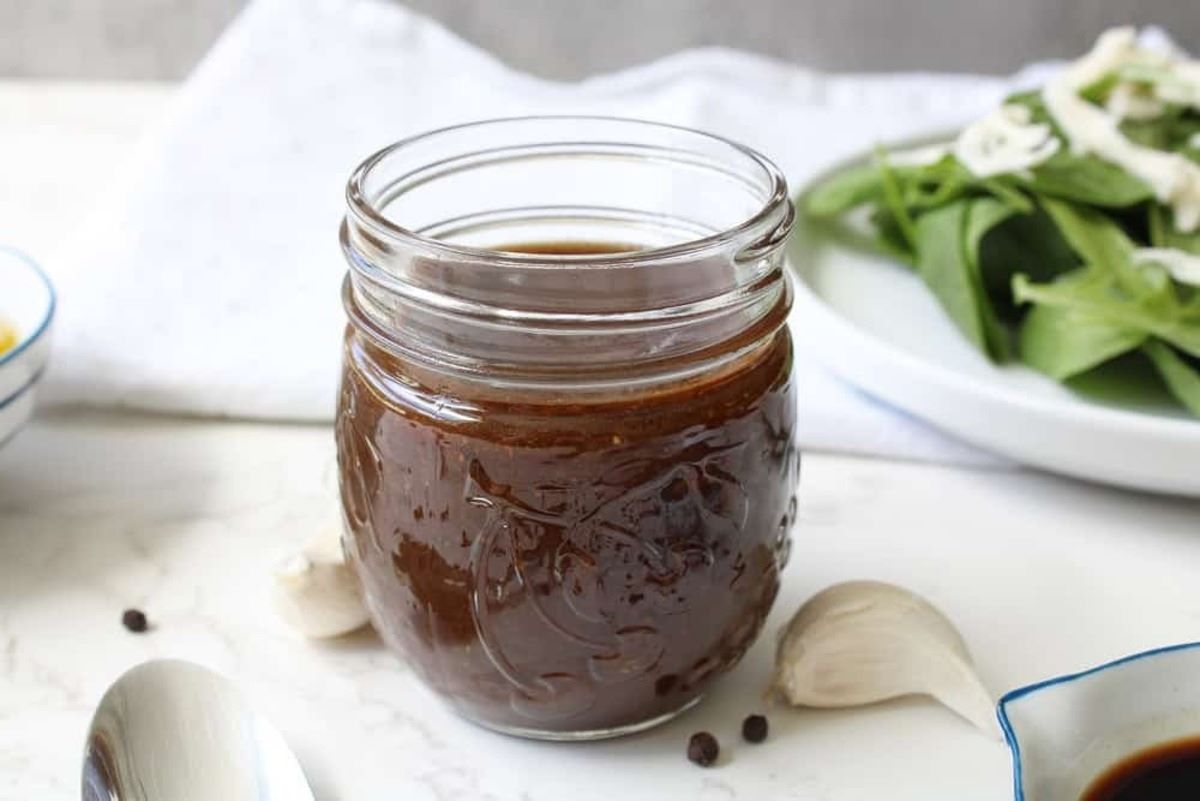
Ingredients For Balsamic Vinaigrette Recipe
Olive oil: A smooth, fruity oil that forms the base of the dressing and helps blend all the flavors together.
Balsamic vinegar: A dark, sweet vinegar that adds a rich tangy flavor to the vinaigrette.
Dijon mustard: A creamy mustard that helps thicken the dressing and adds a mild spicy kick.
Garlic: Fresh garlic gives the dressing a sharp, savory taste.
Honey: Adds a touch of sweetness to balance the vinegar’s acidity.
Salt: Enhances all the flavors in the dressing.
Black pepper: Adds a little heat and depth to the taste.
Technique Tip for This Vinaigrette
When you’re making this balsamic vinaigrette, one of the most important steps is slowly adding the olive oil while whisking the other ingredients. This might sound simple, but it really makes a big difference in how smooth and creamy your dressing turns out. Here’s how to do it:
- Start by mixing the balsamic vinegar, dijon mustard, minced garlic, and honey in a bowl. Give them a good whisk so everything is combined.
- Now, take your olive oil and pour just a little bit at a time into the bowl. While you’re doing this, keep whisking quickly and steadily.
- Keep adding the oil slowly, almost like a thin stream, and don’t stop whisking. This helps the oil and vinegar mix together instead of separating.
- Once all the oil is in, your dressing should look thick and creamy instead of oily and runny.
Why does this matter? When you add the oil slowly and whisk constantly, you’re creating something called an emulsion. That’s just a fancy word for mixing two things that usually don’t want to stay mixed, like oil and vinegar. This makes your dressing taste better and stick to your salad leaves instead of sliding right off.
I remember the first time I made a vinaigrette, I dumped all the oil in at once. The dressing looked oily and separated right away, which was kind of disappointing. Now, I always take my time with this step. It’s a little extra work, but it makes the dressing so much tastier and prettier. Plus, it’s fun to watch the dressing change as you whisk!
Suggested Side Dishes
Alternative Ingredients
olive oil - Substitute with grapeseed oil: Grapeseed oil has a neutral flavor and similar consistency, making it a good alternative for salad dressings.
balsamic vinegar - Substitute with red wine vinegar: Red wine vinegar has a tangy flavor that can mimic the acidity of balsamic vinegar, though it lacks the sweetness. Add a bit of honey to balance it.
dijon mustard - Substitute with yellow mustard: Yellow mustard can provide a similar tangy flavor, though it is milder. You might need to adjust the quantity to taste.
garlic, minced - Substitute with garlic powder: Garlic powder can be used in place of fresh garlic, though it is more concentrated. Use about ⅛ teaspoon of garlic powder for each clove of garlic.
honey - Substitute with maple syrup: Maple syrup can provide a similar sweetness and viscosity, though it will add a slightly different flavor profile.
salt - Substitute with soy sauce: Soy sauce can add a salty and umami flavor, though it will also add a bit of color and a different taste. Use sparingly to avoid overpowering the dressing.
black pepper - Substitute with white pepper: White pepper can provide a similar heat and flavor, though it is slightly milder and will not add black specks to the dressing.
Alternative Recipes Similar to This Vinaigrette
How to Store or Freeze This Dressing
Store your freshly made balsamic vinaigrette in a clean, airtight container, such as a glass jar or a small bottle with a secure lid. This helps maintain its freshness and prevents any unwanted flavors from seeping in.
Keep the container in the refrigerator, where the vinaigrette can stay fresh for up to a week. The cool environment helps preserve the flavors and prevents the olive oil from turning rancid.
Before using, give the vinaigrette a good shake or whisk. The ingredients may separate over time, with the olive oil rising to the top. A quick mix will bring back that harmonious blend of flavors.
If you notice the vinaigrette has thickened in the fridge, let it sit at room temperature for a few minutes. The olive oil may solidify slightly when chilled, but it will return to its liquid state once warmed up.
For those who love to plan ahead, consider freezing your vinaigrette in small portions. Use an ice cube tray to freeze individual servings, then transfer the frozen cubes to a freezer-safe bag or container. This way, you can defrost just what you need without thawing the entire batch.
When ready to use frozen vinaigrette, allow it to thaw in the refrigerator or at room temperature. Once defrosted, give it a good shake or whisk to re-emulsify the ingredients.
Remember, while freezing is an option, the texture and flavor might slightly change. Freshly made vinaigrette always offers the best taste, but freezing can be a convenient alternative for busy days.
How to Reheat Leftovers
Gently whisk the balsamic vinaigrette to recombine any separated ingredients before reheating. This ensures a smooth texture and consistent flavor.
Use a small saucepan over low heat to warm the vinaigrette. Stir continuously to prevent the olive oil from overheating and altering the taste.
Alternatively, place the vinaigrette in a microwave-safe container and heat it in short bursts of 10-15 seconds. Stir between intervals to evenly distribute the heat.
If using the vinaigrette on a warm salad, such as a roasted vegetable salad, consider drizzling it over the dish and allowing the residual heat to gently warm the dressing.
For a more intense flavor, add a splash of fresh balsamic vinegar or a pinch of dijon mustard after reheating to brighten the taste.
To maintain the integrity of the garlic, avoid overheating, as it can become bitter. Keep the reheating process gentle and brief.
Essential Tools for Making This Vinaigrette
Mixing bowl: A mixing bowl is essential for combining the ingredients like balsamic vinegar, dijon mustard, minced garlic, and honey. It provides enough space to whisk everything together without spilling.
Whisk: A whisk is used to blend the ingredients smoothly and to emulsify the vinaigrette as you slowly drizzle in the olive oil.
Measuring cups: Measuring cups are necessary to accurately measure the olive oil and balsamic vinegar, ensuring the right balance of flavors.
Measuring spoons: Measuring spoons help in precisely measuring the dijon mustard, honey, salt, and black pepper.
Garlic press: A garlic press is useful for mincing the garlic quickly and efficiently, ensuring it is finely chopped for the vinaigrette.
Storage container: A storage container is needed if you plan to store the vinaigrette in the refrigerator. It should be airtight to maintain freshness.
Time-Saving Tips for This Recipe
Pre-mince garlic: Mince a batch of garlic ahead of time and store it in the fridge to save time when making dressings.
Use a jar: Combine all ingredients in a jar and shake vigorously to emulsify, skipping the whisking step.
Batch make: Double or triple the recipe and store extra in the fridge for future use.
Pre-measure ingredients: Measure out the olive oil, balsamic vinegar, and other ingredients in advance to streamline the process.
Use a blender: Blend all ingredients quickly in a blender for a smooth, emulsified vinaigrette.
Balsamic Vinaigrette
Ingredients
Main Ingredients
- ½ cup Olive oil
- ¼ cup Balsamic vinegar
- 1 tablespoon Dijon mustard
- 1 clove Garlic, minced
- 1 teaspoon Honey
- to taste Salt
- to taste Black pepper
Instructions
- 1. In a bowl, whisk together balsamic vinegar, Dijon mustard, minced garlic, and honey.
- 2. Slowly drizzle in the olive oil while whisking continuously until the dressing is emulsified.
- 3. Season with salt and black pepper to taste.
- 4. Serve immediately or store in the refrigerator for up to a week.
Nutritional Value
Keywords
More Amazing Recipes to Try 🙂
- Lentil Ham Soup Recipe1 Hours 15 Minutes
- Hot Beef Sandwiches Recipe30 Minutes
- Mexican Steak Torta Recipe30 Minutes
- Irish Wheaten Bread Recipe55 Minutes
- Ham Bone and Vegetable Soup Recipe2 Hours 15 Minutes
- Hot Cocoa Mix Recipe10 Minutes
- Simple Syrup Recipe10 Minutes
- Cauliflower Soup Recipe30 Minutes
Leave a Reply