
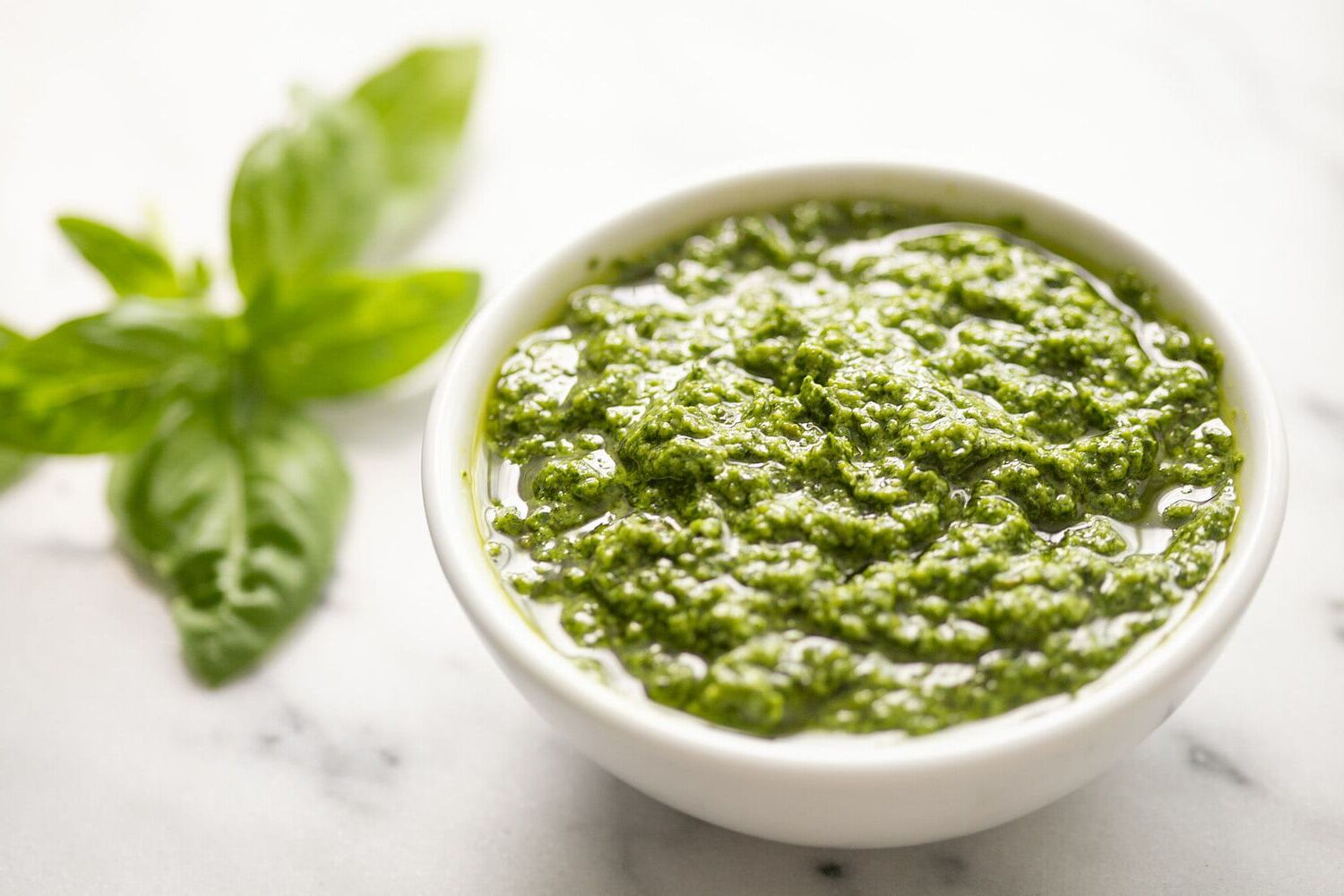
I love making pesto sauce because it brings fresh, bright flavors to any meal. It’s simple to make and feels like a little green magic in your kitchen. I can’t wait for you to try it and see how it can add a tasty twist to your dishes.
Some ingredients like fresh basil and pine nuts might not be in your pantry right now. When you go to the supermarket, look for fresh basil in the produce section—it should smell fragrant and look vibrant. Pine nuts are usually found near other nuts or in the baking aisle. Parmesan cheese is often sold pre-grated or in blocks, so pick whichever you prefer for your pesto.
Ingredients For Pesto Sauce Recipe
Fresh basil leaves: These give pesto its bright, herbal flavor and fresh green color.
Parmesan cheese: Adds a salty, nutty taste that makes the sauce rich and creamy.
Extra virgin olive oil: Helps blend everything together and adds smoothness with a fruity flavor.
Pine nuts: Small nuts that add a buttery texture and subtle crunch.
Garlic: Gives the pesto a little kick and depth of flavor.
Salt: Enhances all the flavors in the sauce.
Black pepper: Adds a mild heat and balances the taste.
Technique Tip for This Recipe
When you’re making this pesto sauce, one of the most important steps is adding the olive oil slowly while the food processor is running. This might sound simple, but it really makes a big difference in how smooth and creamy your sauce turns out. Here’s how you can do it step by step:
- Start your food processor with the basil, pine nuts, and garlic already pulsed together.
- While it’s running, pour the olive oil in a thin, steady stream. Don’t dump it all in at once!
- Keep the food processor running as you add the oil, so the ingredients blend evenly.
- Stop adding oil once the mixture looks smooth and creamy, but still thick enough to spread.
Doing this slowly helps the olive oil mix properly with the other ingredients instead of separating or making the sauce too runny. It also helps the pesto get that perfect silky texture that sticks well to pasta or bread.
When I first tried this recipe, I poured the oil in too fast, and my pesto ended up a little oily and thin. After that, I learned to be patient and pour slowly, and it made a huge difference. Plus, it’s kind of fun to watch the sauce change texture right before your eyes!
If you don’t have a food processor, you can also use a blender or even a sturdy bowl and a fork to mash things up, but just remember to add the oil slowly to keep that creamy texture. This little trick will make your homemade pesto sauce taste like it came from a fancy kitchen!
Suggested Side Dishes
Alternative Ingredients
fresh basil leaves - Substitute with spinach leaves: Spinach provides a mild flavor and similar texture, making it a great alternative when basil is unavailable.
fresh basil leaves - Substitute with arugula: Arugula adds a peppery kick to the pesto, offering a unique twist while maintaining a leafy green base.
grated parmesan cheese - Substitute with pecorino romano: Pecorino romano has a similar texture and salty flavor, making it an excellent replacement for parmesan.
grated parmesan cheese - Substitute with nutritional yeast: Nutritional yeast provides a cheesy flavor and is a vegan-friendly option for those avoiding dairy.
extra virgin olive oil - Substitute with avocado oil: Avocado oil has a similar consistency and mild flavor, making it a suitable alternative for olive oil.
extra virgin olive oil - Substitute with canola oil: Canola oil is a neutral-flavored oil that can be used in place of olive oil in a pinch.
pine nuts - Substitute with walnuts: Walnuts offer a similar texture and nutty flavor, making them a cost-effective alternative to pine nuts.
pine nuts - Substitute with almonds: Almonds provide a slightly sweet and nutty flavor, which complements the other ingredients in pesto.
minced garlic - Substitute with garlic powder: Garlic powder can be used when fresh garlic is unavailable, though it may require adjustment in quantity for flavor.
minced garlic - Substitute with shallots: Shallots offer a milder, sweeter flavor compared to garlic, adding a different but pleasant taste to the pesto.
salt - Substitute with soy sauce: Soy sauce can add a salty and umami flavor, providing depth to the pesto while also adding moisture.
black pepper - Substitute with white pepper: White pepper offers a similar heat and flavor profile, with a slightly different aroma, making it a good alternative.
Alternative Recipes to Try
How to Store or Freeze This Sauce
To keep your pesto sauce fresh and vibrant, store it in an airtight container. A glass jar with a tight-fitting lid works wonders. Before sealing, drizzle a thin layer of olive oil on top to prevent oxidation.
If you plan to use the pesto within a week, the refrigerator is your best friend. Keep it chilled and ready to elevate your dishes with a burst of flavor.
For longer storage, consider freezing. Portion the pesto into ice cube trays for convenient, single-use servings. Once frozen, transfer the cubes to a resealable plastic bag, ensuring you squeeze out as much air as possible.
When you're ready to use your frozen pesto, simply pop out a cube or two and let them thaw in the refrigerator or at room temperature. Avoid microwaving to preserve the delicate flavors.
If you find yourself with an abundance of basil, consider making a larger batch of pesto and freezing it in larger containers. Just remember to leave some space at the top for expansion.
For a twist, try adding a squeeze of lemon juice before freezing. This not only enhances the flavor but also helps maintain the vibrant green color.
Remember, pesto can be more than just a pasta sauce. Use it as a marinade for chicken, a spread on sandwiches, or a topping for soups and salads. With these storage tips, you'll always have a taste of summer at your fingertips.
How to Reheat Leftovers
Gently warm the pesto sauce in a small saucepan over low heat. Stir continuously to prevent the olive oil from separating. This method preserves the fresh flavors of the basil and garlic.
Use a double boiler by placing the pesto sauce in a heatproof bowl over a pot of simmering water. This indirect heat method ensures the parmesan cheese melts evenly without scorching.
For a quick fix, microwave the pesto sauce in a microwave-safe bowl. Cover it loosely and heat in short intervals of 10-15 seconds, stirring in between, to maintain the sauce's texture and aroma.
If you're incorporating the pesto sauce into a hot dish, such as pasta, simply toss it with the freshly cooked pasta. The residual heat will warm the sauce perfectly without additional cooking.
For a cold dish, like a pesto salad, allow the sauce to come to room temperature naturally. This method keeps the flavors vibrant and the texture intact.
Essential Tools for This Recipe
Food processor: A kitchen appliance used to chop, mix, and blend ingredients quickly and efficiently, perfect for making pesto smooth and well-combined.
Measuring cups: Essential for accurately measuring the basil leaves, parmesan cheese, olive oil, and pine nuts to ensure the right balance of flavors.
Measuring spoons: Useful for measuring small quantities of ingredients like salt and pepper to season the pesto precisely.
Garlic press: Handy for mincing garlic cloves quickly and evenly, ensuring the garlic is well-distributed in the pesto.
Spatula: Ideal for scraping down the sides of the food processor to ensure all ingredients are evenly incorporated.
Knife: Necessary for trimming and preparing the fresh basil leaves before adding them to the food processor.
How to Save Time on Preparation
Pre-measure ingredients: Measure and prepare all ingredients like basil leaves, parmesan cheese, and pine nuts in advance to streamline the process.
Use pre-minced garlic: Save time by using store-bought pre-minced garlic instead of mincing fresh cloves.
Batch process: Make a larger batch of pesto sauce and freeze portions for future use, reducing prep time for future meals.
Food processor efficiency: Ensure your food processor is clean and ready to go before starting to avoid interruptions.
Pre-toast pine nuts: Toast pine nuts in advance and store them in an airtight container to save time.
Pesto Sauce Recipe
Ingredients
Main Ingredients
- 2 cups Fresh Basil Leaves
- ½ cup Grated Parmesan Cheese
- ½ cup Extra Virgin Olive Oil
- ⅓ cup Pine Nuts
- 3 cloves Garlic minced
- ¼ teaspoon Salt
- ¼ teaspoon Black Pepper
Instructions
- Combine basil, pine nuts, and garlic in a food processor and pulse until coarsely chopped.
- Add Parmesan cheese and pulse a few times more.
- Slowly add olive oil while the food processor is running, until the mixture is smooth.
- Season with salt and pepper to taste.
Nutritional Value
Keywords
More Amazing Recipes to Try 🙂
- Pear Bread Recipe1 Hours 15 Minutes
- Spicy Tuna Fish Sandwich Recipe10 Minutes
- Keto Tuna Salad Recipe10 Minutes
- Chili Seasoning Mix Recipe5 Minutes
- Hot and Sour Soup Recipe35 Minutes
- Hatch Chili Recipe1 Hours
- Fig Preserves Recipe1 Hours 15 Minutes
- Steakhouse Wheat Bread Recipe50 Minutes






Leave a Reply